Secondary containment trays and tie-down kits protect active worksites from environmental code infractions, chemical spills, and high-wind structural tip-overs. A standard portable restroom tank holds 60 gallons of…
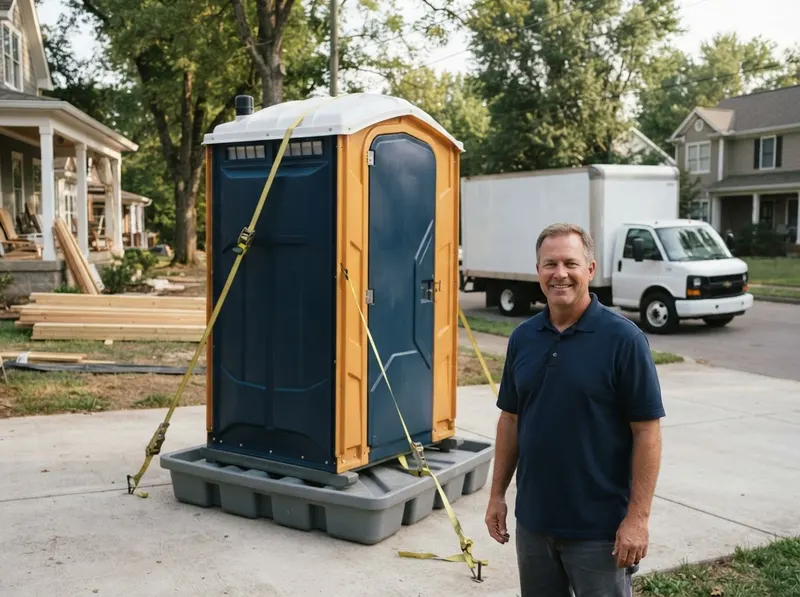
Secondary containment trays and tie-down kits protect active worksites from environmental code infractions, chemical spills, and high-wind structural tip-overs. A standard portable restroom tank holds 60 gallons of liquid and deodorizing concentrate. In steep terrain like Green Hills or Bellevue, an unsecured portable toilet rests on unstable soil prone to settling or shifting during heavy middle-Tennessee rainstorms. Placing a high-lip containment pan directly underneath the skid creates a dedicated catchment zone capable of holding residual spills, pump valve drips, or wash-down liquid before it enters sensitive soil or drainage paths near Shelby Bottoms Greenway. The heavy polyethylene pan sits flush with the dirt or pavement, adding ground stability without blocking door clearance or user entry.
Anchoring becomes essential during spring storm fronts and gust conditions across open or elevated corridors like The Gulch, Wedgewood-Houston, and Antioch. High wind speeds can push unsecured 230-pound empty poly units across construction zones, resulting in shattered tanks and contaminated runoff. Tie-down kits counter this risk using heavy-duty ratchet webbing secured to four corners of the unit. On bare ground in Sylvan Park or Donelson, technicians drive 24-inch ribbed rebar stakes into the grade at opposing angles. On paved alleys or dense staging areas in Germantown and 12 South, anchoring shifts to weighted ballasts or concrete screw anchors. The functional trade-off is site flexibility versus absolute perimeter security: unanchored units allow easy manual shifting around changing utility ditches, whereas staked setups fix the footprint rigidly in place until service technicians pull the stakes.
Nashville stormwater regulations enforce strict oversight on illicit wastewater discharges into municipal storm sewer systems. Failing an unannounced environmental inspection can lead to immediate work-stop orders on commercial sites. Deploying a containment pan directly resolves environmental compliance risks, while tie-down assemblies eliminate liability from tipped equipment on high-traffic downtown fringes. The process requires 3 distinct physical stages: 1) leveling the subgrade on-site, 2) sliding the containment pan into the exact perimeter footprint, and 3) driving ground anchors or setting anchor weights before ratcheting straps to calibrated tension.
Every job gets a firm, written price after a free on-site visit.
Tell us about your containment pan & tie-down kit job in Nashville and we'll send a clear, written quote, usually the same day.
 Prairie Dog Portable Toilets